Time Finally Makes Sense
A free interactive game that teaches children to tell the time — from seconds to seasons.
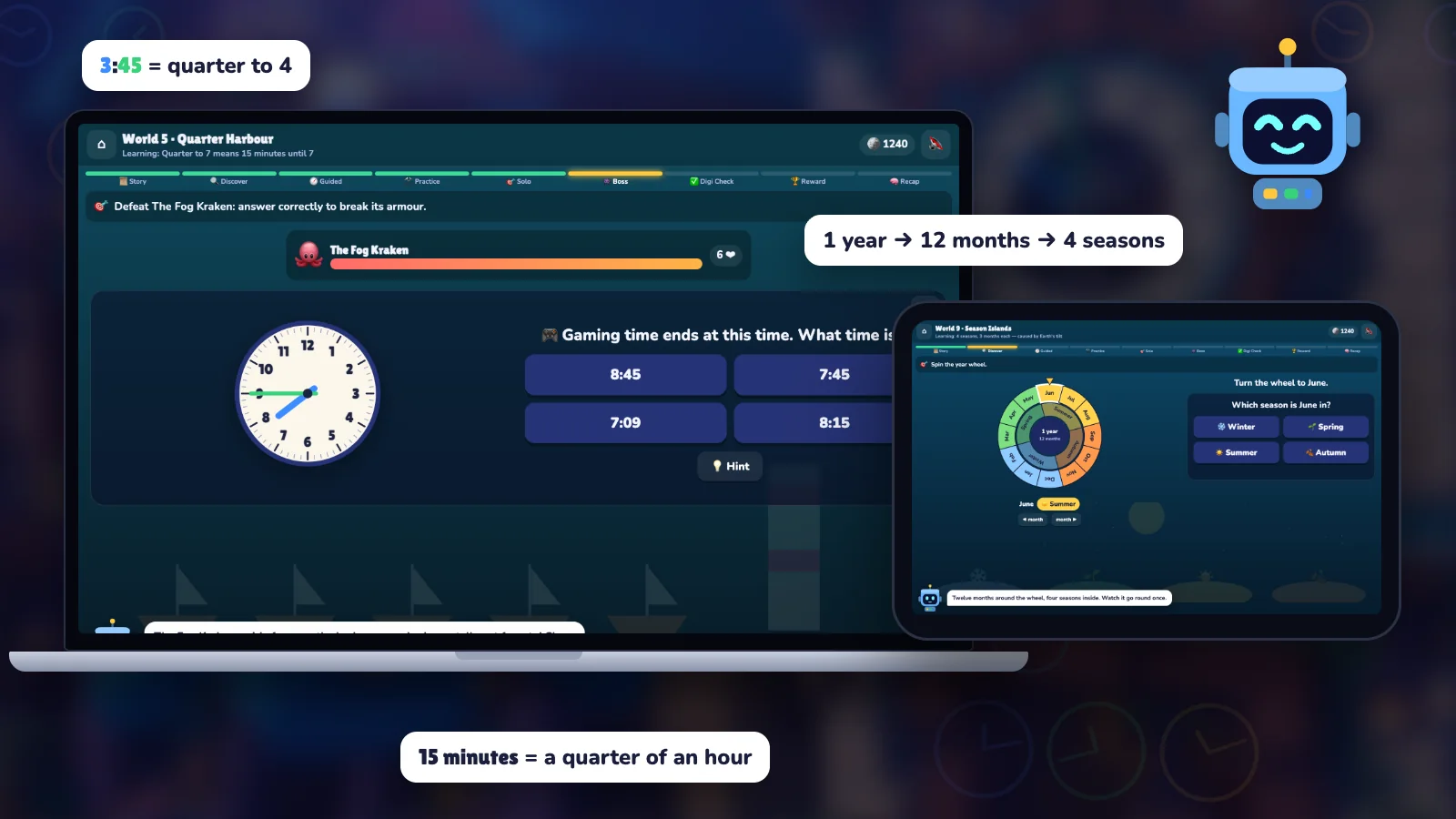
Why is telling the time so hard?
Telling the time asks a child to juggle several ideas at once. The short hand doesn’t point at the hour — it travels through it, so at 3:45 it sits nearly on the 4 and the clock looks like it says 4:45. The 3 on the clock face can mean three o’clock or fifteen minutes. “Quarter to” names an hour that hasn’t arrived yet. Sixty minutes quietly turns into an hour, and the months aren’t even the same length.
None of this is a memory problem. It is a missing mental model: a picture of how the hands, the minutes and the hours fit together.
What does “quarter to 4” actually mean?
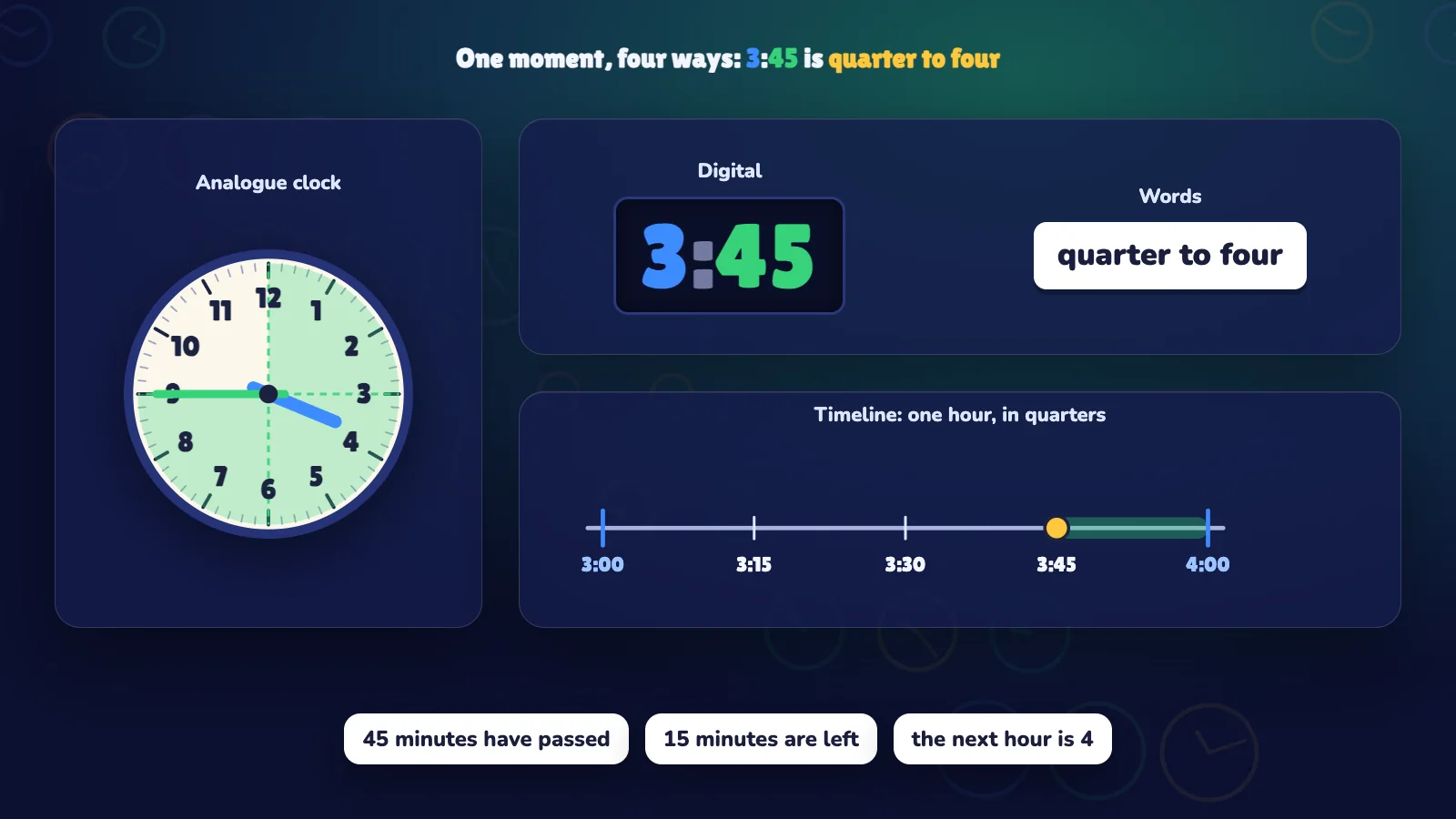
- 45 minutes have passed
- 15 minutes are left
- the next hour is 4
3:45 = quarter to four
The minute hand shows how much of the hour has passed. The hour hand shows which hour you’re still in.
Read more in quarter past and quarter to, explained.
One ladder of time
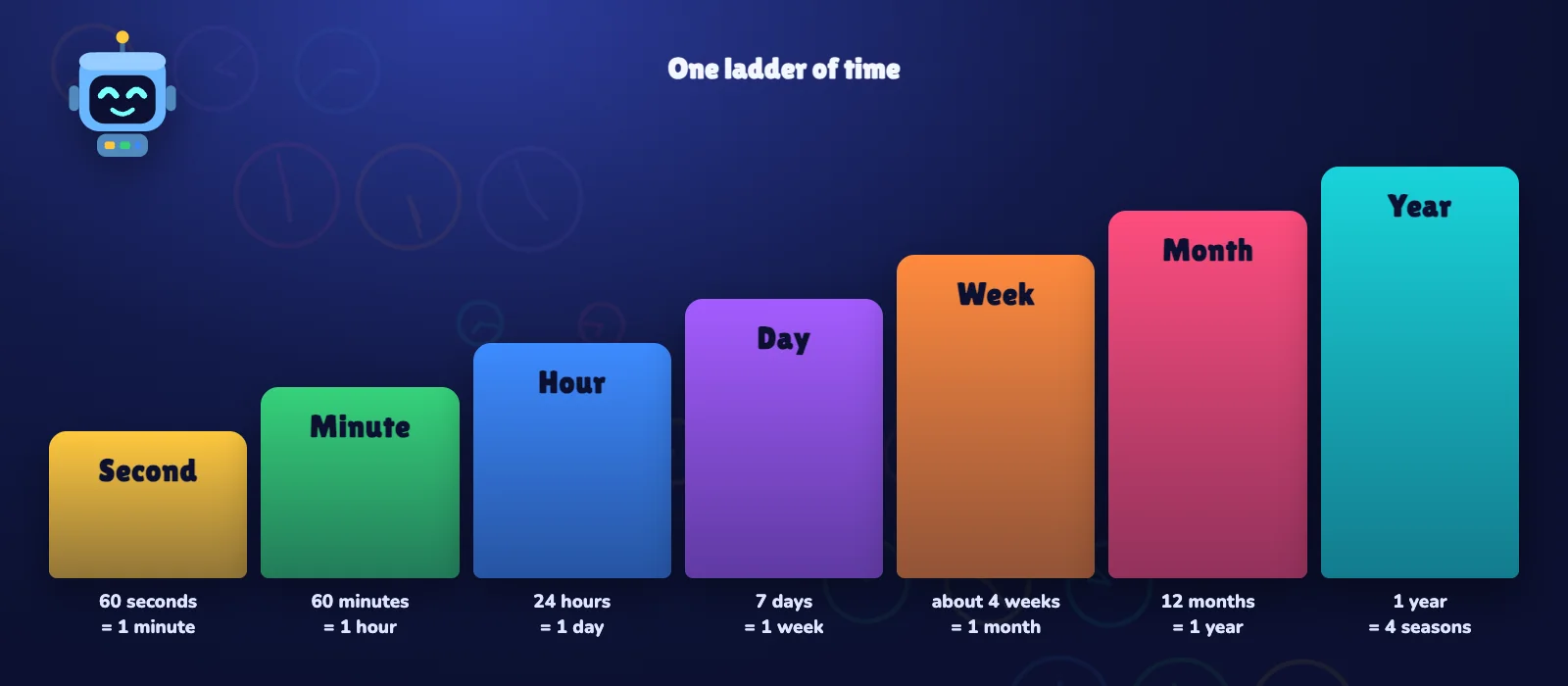
60 seconds make a minute. 60 minutes make an hour. 24 hours make a day, 7 days make a week, and 12 months make a year — with four seasons of three months each. One honest exception: months aren’t all the same length (28 to 31 days), so a month is “about four weeks”, never exactly. In Digi’s Time Quest children climb this ladder one rung at a time, so every new unit is built from the one before.
More than just reading clocks
O’clock and half past
Where both hands go — and why the hour hand is halfway to the next number at half past.
Quarter past and quarter to
An hour cut into four quarters of 15 minutes, on a clock and on a timeline.
The five-minute scale
Each number is worth 5 minutes: the minute hand on 7 means 35, not 7.
Elapsed time
“How long did it take?” — jump to the next o’clock, then add the rest.
Days, weeks and months
A real calendar, the order of the months, and why February is short.
Seasons and why they happen
Three months in each season — and the tilt of the Earth that causes them.
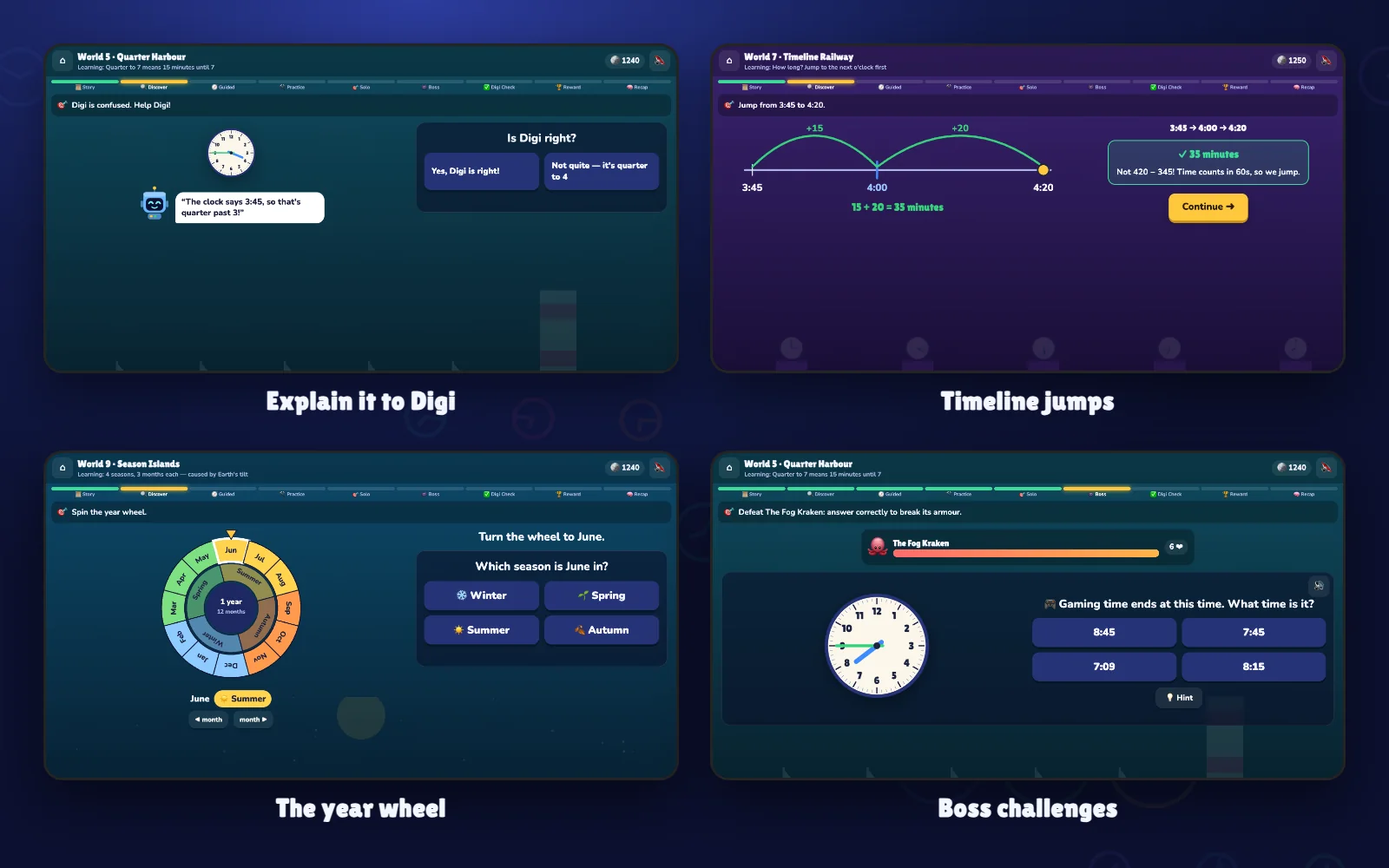
Understanding, not memorising
Every idea is met three times. First children move something — drag the clock hands, fill an hour with minutes, spin the year wheel. Then they see a picture of it, such as an hour drawn as a timeline. Only then do they meet the digits and words: 3:45, “quarter to four”. The game draws on the idea of moving from concrete to visual to abstract, an approach informed by established ways of teaching mathematics.
Sometimes Digi gets it wrong on purpose — “3:45, that’s quarter past 3!” — and the child explains why Digi is mistaken. Mistakes are never marked wrong: a short animation shows exactly the idea that tripped them up, and a similar question follows.
A 10-world time adventure
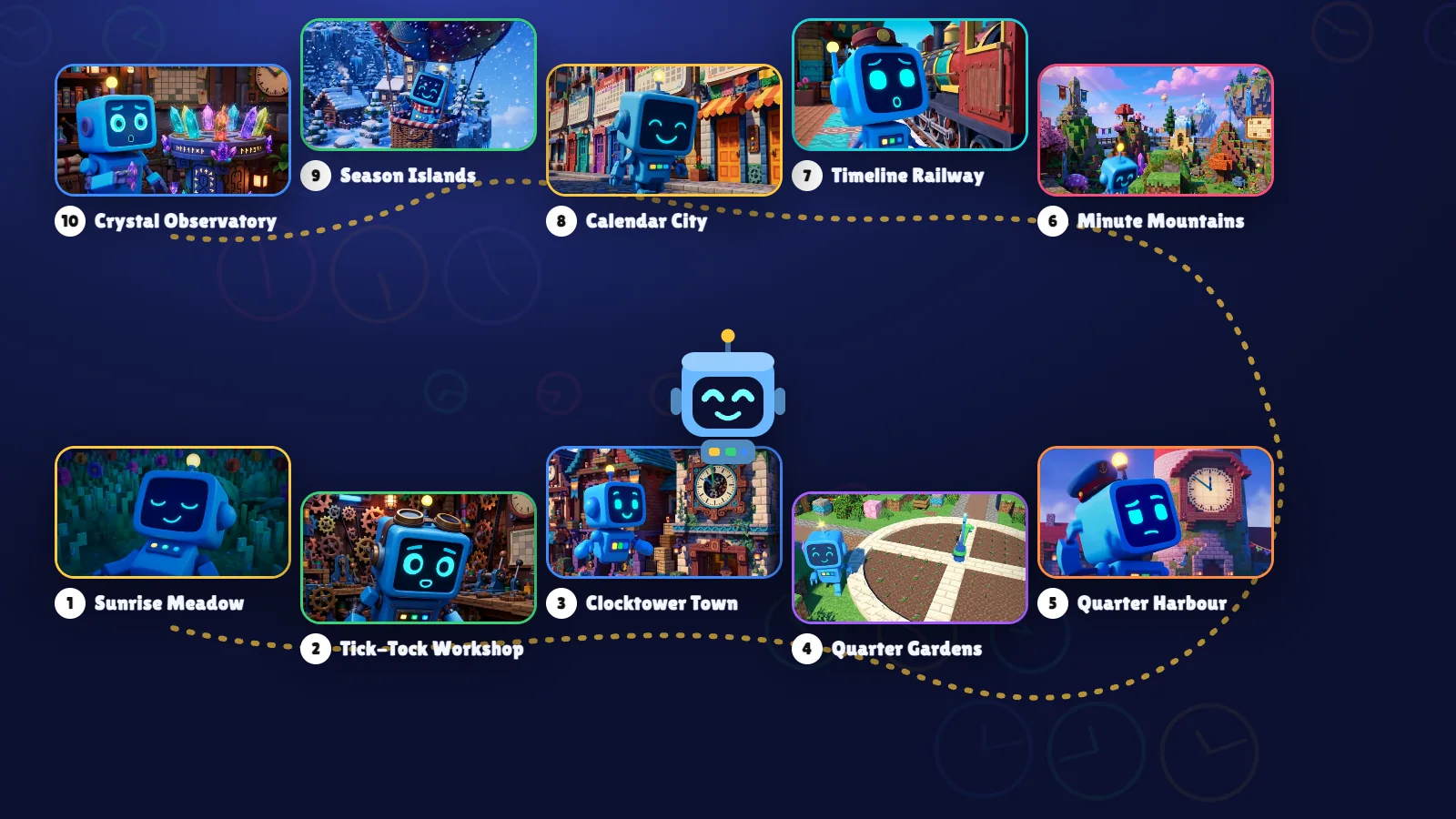
- Sunrise Meadow — What is time?
- Tick-Tock Workshop — Seconds, minutes and hours
- Clocktower Town — Meet the clock
- Quarter Gardens — O’clock, half past and quarter past
- Quarter Harbour — Quarter to
- Minute Mountains — The minute scale
- Timeline Railway — Elapsed time
- Calendar City — Days, weeks and months
- Season Islands — Seasons
- Crystal Observatory — The Great Time Quest
Free to play
Free, with no subscription, no signup and no ads. Open the page and play — progress is saved on your device. Grown-ups can find tips in the guide for parents and answers in the FAQ.
Part of the Digi family
If your child liked telling the time with Digi, meet Digi’s number adventure — and the other way round. Both games share the same friendly robot guide, the same calm style and the same promise: free, private and built for understanding.